
2026 End of Session & Implementation Report
At the conclusion of each legislative session, OCCA publishes an End of Session Report to provide an overview of the session, bills OCCA tracked, and outcomes. OCCA also publishes an Implementation Report, but during a short legislative session, these reports are combined. This report was prepared by the staff at OCCA.
Questions?
Please contact OCCA Deputy Director John Wykoff (jwykoff@occa17.com, 503-399-9912) if you have any questions about the 2026 Legislative Session or any bills OCCA tracked.
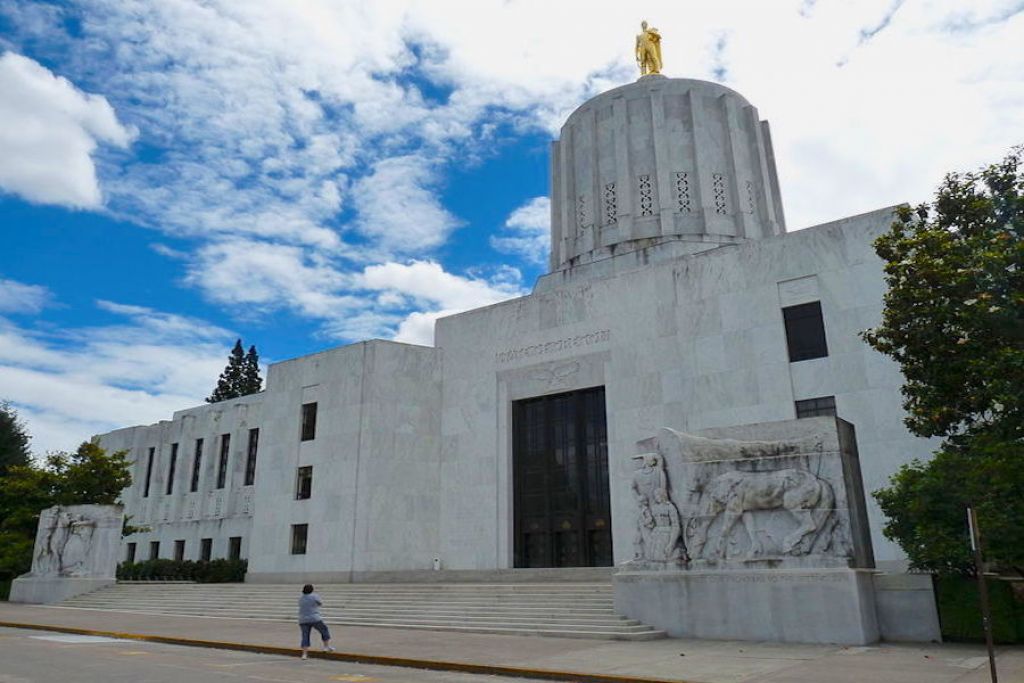
2026 Legislative Session Highlights
Session Overview
As the 2026 Legislative Session began, legislators faced a $63 million shortfall in the 2025–2027 state budget and projections of $15.1 billion in federal revenue losses between 2027 and 2031, primarily related to Medicaid and SNAP. Earlier quarterly revenue forecasts had also raised concerns that Oregon might be heading toward an economic slowdown or recession that could further reduce state resources.
Before the session, the Legislative Fiscal Office (LFO) directed all state agencies, including the Higher Education Coordinating Commission (HECC), to prepare 5 percent and 2.5 percent budget reduction scenarios. These scenarios affected every HECC-managed program, including the Community College Support Fund (CCSF), the Public University Support Fund (PUSF), the Oregon Opportunity Grant, and the Oregon Promise. Under the 5 percent scenario, the Oregon Promise would have stopped accepting new students, the CCSF would have been reduced by $41 million, and Career Pathways funding would have been reduced by $3 million.
Given the potential for significant reductions, OCCA focused its advocacy on preventing cuts to the CCSF and other HECC programs that directly support community college students.
On February 4, the Legislature received the quarterly economic forecast, which showed modest improvement. The 2025–2027 budget moved from a projected deficit to a $38 million surplus, and the state economist lowered the probability of a recession to 20 percent.
In the end, the Legislature passed HB 5204, the budget reconciliation bill, which made approximately $155 million in statewide reductions. None of those cuts were applied to higher education, and funding for the CCSF, PUSF, Oregon Opportunity Grant, and Oregon Promise remained intact.
Community College Governance (SB 1537)
SB 1537 followed SB 478, which was introduced in the 2025 session by Senator Lew Frederick and Senator Kayse Jama. That bill would have required each board to have a voting student member, required publicly available email addresses for board members, and established a timeline and process for filling board vacancies, among other governance provisions. OCCA opposed SB 478 in 2025, and it did not move forward.
SB 1537 incorporated most of the changes OCCA had requested during the 2025 discussions, with the exception of language excluding nonvoting board members from executive session. OCCA worked with Senator Frederick to include language allowing boards to adopt policies regarding whether a nonvoting student member could participate in executive session.
The bill would have required community colleges to provide publicly accessible email addresses for board members, established a requirement for a nonvoting student member on each board, and created procedures for filling board vacancies. The legislation also would have required colleges to report to the Legislature on compliance with these requirements.
SB 1537 passed the Senate and was referred to the House Committee on Education. House Education Committee Vice Chair Rep. Emily McIntire raised concerns about the executive session language and proposed an amendment to fully exclude the nonvoting board member from executive session. The committee adopted the amendment and passed the bill to the House Floor.
After reaching the House Floor, the bill was re-referred to the House Committee on Education, which typically occurs when there are insufficient votes for passage. The bill did not move forward.
Capital Construction Projects (SB 5701, SB 5702)
During the session, OCCA worked with Southwestern Oregon Community College (SWOCC), HECC, and LFO to correct a capital construction authorization approved in 2025. Although SB 5505 (2025) approved SWOCC’s project, it inadvertently retained the original 2023 project scope and $8 million funding level rather than the college’s updated $5 million workforce training project.
OCCA coordinated with partners and provided legislative testimony to ensure the correction was made so the college could proceed with its local match and remain on schedule. The correction was enacted through SB 5701-2, which updated the project’s name, scope, and funding level, and SB 5702-1, which adjusted the bond authorization.
SB 5701-2 also updated the name and scope of Portland Community College’s previously authorized capital project from the 2023–2025 biennium. The authorized funding level remained unchanged.
Advocacy
OCCA provided community college board members, presidents, students, faculty, and staff with tools and opportunities to connect with legislators and advocate for community college budget and policy priorities during the 2026 Legislative Session.
Direct Advocacy
OCCA engaged in direct legislative advocacy before and during the session. OCCA provided in-person and written testimony on numerous bills and worked with legislators on amendments related to community college governance and public meetings law. OCCA also coordinated with advocacy partners including labor organizations, student groups, and other higher education stakeholders.
Advocacy Toolkit
OCCA created an online advocacy toolkit for board members, advocates, and stakeholders. The toolkit, available on the OCCA website, included talking points, one-page information sheets for legislative priorities, and other materials supporting advocacy efforts. OCCA updated the toolkit throughout the session.
One-Click Politics
OCCA continued to use the One-Click Politics grassroots advocacy platform to provide board members, presidents, staff, faculty, students, and other stakeholders with a simple way to contact legislators. Users could communicate with legislators through email, video message, the social media platform X, or phone.
During the session, OCCA also opened the platform for colleges to create their own advocacy campaigns. Portland Community College and Central Oregon Community College used this service, which is now included with OCCA membership.
Because the 2026 session was a short session, OCCA conducted one statewide advocacy campaign.
- Community College Lobby Day: This campaign encouraged legislators not to reduce CCSF funding for the remainder of the 2025–27 biennium. The campaign coincided with Community College CTE and Lobby Day at the Capitol on February 18, 2026, and provided an option for advocates who could not attend in person to contact legislators. The campaign generated 345 emails to 68 legislators and 141 posts on X.
- Thank You Campaign: OCCA also is planning a post-session campaign to thank legislators for maintaining CCSF funding through the biennium.
CTE Month
During National CTE Month in February, OCCA again supported a virtual campaign highlighting community college Career and Technical Education programs. Using guidance and resources provided by OCCA, colleges promoted their programs on social media with weekly themes highlighting different career pathways.
CTE Day and Lobby Day
For the first time since 2020, OCCA hosted an in-person CTE Day and Community College Lobby Day at the Capitol on February 18, 2026. Twelve colleges provided hands-on CTE demonstrations in the Capitol’s East Galleria highlighting programs across several career pathway areas. Legislators, staff, and members of the public engaged with students and faculty to learn about community college workforce programs.
Community college presidents, board members, staff, and students also scheduled meetings with legislators, and several participants were recognized through floor courtesies in the House and Senate. The day began with an OCCA-hosted breakfast at Willamette University to allow participants to network before visiting the Capitol.
Weekly Legislative Calls
OCCA hosted a weekly Zoom call each Tuesday afternoon during the session to update college board members, presidents, and staff on legislative developments. Each call included updates on activity at the Capitol, upcoming bill hearings, opportunities for advocacy or testimony, and time for questions. Participation was strong throughout the session.
OCCA Digest
The weekly OCCA Digest e-newsletter provided updates on the legislative session, advocacy opportunities, and a calendar of upcoming hearings. The Digest currently has nearly 750 subscribers, primarily community college board members, presidents, staff, and faculty. Other stakeholders also subscribe to stay informed about community college issues.
Campus Advocacy Coordinators (CACs)
OCCA worked closely with Campus Advocacy Coordinators from the colleges to share consistent messages and coordinate advocacy efforts throughout the session. CACs served as key liaisons between OCCA and the colleges, helped organize participation in CTE Day, and assisted in identifying students, faculty, and community partners to provide testimony. To prepare for the session, OCCA hosted a CAC retreat in July 2025.
Tracked Bills by Category
(P) = Passed (DNP) = Did Not Pass
Budget
(P) State Agency/Emergency Board Budget & Expenditure Limitation Bill (HB 5204) – Modifies certain biennial appropriations made from the General Fund to specified state agencies and the Emergency Board. This legislation became the vehicle for the rebalance of the state budget. There were no cuts to the Community College Support Fund or other higher education budgets in this legislation.
- Required Implementation: No implementation action is required.
Campus Safety
(DNP) Local Government Cybersecurity Incident Reporting Requirements (HB 4055) – Requires a local government, local service district or special government body to notify and submit a report to the State Chief Information Officer within 48 hours of an information security incident or ransomware incident. This legislation received a public hearing but did not move any further in the process.
(P) Immigration Enforcement Response Policies for Schools & Higher Education (HB 4079) – Directs school district boards and governing bodies of institutions of higher education to adopt policies that address how the school district or the institution of higher education will respond when a federal immigration authority enters school property or a campus. OCCA joined public universities and school districts in working with Rep. Finger McDonald to address concerns about how the bill as introduced would be implemented by institutions. OCCA submitted to the House and Senate Education Committees during consideration of the bill and supported the bill as amended. HB 4079 becomes effective on September 30, 2026.
HB 4079 requires community college boards to adopt a policy for providing notice when a federal immigration authority is confirmed to have entered a campus for immigration enforcement. “Campus” is defined as “real property owned or controlled by an institution of higher education that is accessed by students of the institution of higher education on a regular basis, as identified by the governing board.” The policy must be consistent with the Attorney General’s Model Immigration Policies and must:
- Identify at least one administrator who is responsible for confirming that a federal immigration authority has entered campus for immigration enforcement, and providing notice to students and employees;
- Describe property that is considered the campus for purposes of a notice;
- Require, unless prohibited by law or court order, reasonable efforts to provide notice to a student when the college has provided information related to the student to a federal immigration authority;
- Require notice that when a federal immigration authority has been confirmed to be on campus be provided to enrolled students and employees using existing notification systems;
- Specify the contents and delivery requirements of notice consistent with required information outlined in Section 2(3)(e) of HB 4079 which must be provided as expediently as possible;
- Ensure compliance with Oregon’s Sanctuary Promise laws;
- Require initial training of any person identified as responsible for confirming the presence of a federal immigration authority on campus and providing notice to students and employees, and subsequent training at least once every two years; and
- Require that the adopted policy be made available on the college’s website and any other locations where the college provides information about immigration or emergencies.
The bill grants immunity from tort liability for college employees and institutions. Finally, HECC is required to submit a report by October 1, 2026, to the legislative interim education committees that summarizes for each higher education institution the real property that has been identified by governing boards as a campus.
- Required Implementation: 1) Community college boards of education must adopt a board policy consistent with the requirements outlined above. In addition, the board must define real property owned or controlled by the college that is within the definition of campus for purposes of required notifications to students and employees. OCCA will develop a model board policy template for member colleges to use in complying with the new law.
2) Administrators responsible for confirming federal immigration authorities are on campus for purposes of immigration enforcement and sending out notifications must attend an initial training on the requirements of HB 4079 and any applicable model policies published by the Attorney General.
3) The adopted board policy must be posted on the college’s website and in any other locations where the college provides information about immigration or emergencies.
4) Colleges will need to provide the adopted campus definition to HECC so HECC can meet its reporting requirement by October 1, 2026.
Capital Construction
(P) State Capital Construction Expenditure Limitations (SB 5701) – Modifies previously approved lottery bonding provisions. OCCA worked closely with Southwestern Oregon Community College (SWOCC), the HECC, and LFO to correct a technical issue from 2025 legislation that inadvertently retained the original project scope and funding level for SWOCC’s capital project. OCCA coordinated with partners and provided testimony to ensure the Legislature updated the project’s name, scope, and funding level this session so the college can proceed with its local match and move forward with a revised $5 million project to modernize welding and manufacturing labs in Fairview Hall.
SB 5701-2 also updates the name and scope of Portland Community College’s (PCC) previously authorized capital project from 2023-2025. Following additional planning and design work, PCC will renovate the existing Rock Creek Building 2 to support updated instructional, CTE, and student collaboration space while constructing a new facility to house the Building Construction Technology program.
- Required Implementation: No implementation action is required.
(P) State Capital Construction Expenditure Limitations (SB 5702) – Establishes and modifies limits on payment of expenses from specified funds by certain state agencies for capital construction. This bill adjusts the bond authorization amount to align with the corrected project scope and funding level included in SB 5701.
- Required Implementation: No implementation action is required.
Education Policy
(DNP) Senator Aaron Woods Commission on Artificial Intelligence (HB 4103) – Establishes the Senator Aaron Woods Commission on Artificial Intelligence within the office of Enterprise Information Services. This legislation would have created the Commission on Artificial Intelligence, named after former Clackamas Community College Board member and former State Senator Aaron Woods. The legislation passed out of committee and was then referred to the Joint Committee on Ways and Means where it did not move further in the process.
Ethics
(P) Local Government Representation on Ethics Commission (HB 4159) – Provides that the Governor shall appoint one member of the Oregon Government Ethics Commission (OGEC) who has local government experience. This consensus bill is the product of a legislative workgroup led by Rep. Nathan Sosa to address several issues related to Oregon ethics and public meetings laws. It requires that at least one member of OGEC must have local government experience. In addition, HB 4159 importantly clarifies that attorney-client privilege is not waived when communication is made to OGEC for purposes of information regarding a complaint pending before the commission. OCCA participated in the workgroup and supported the bill.
- Required Implementation: No implementation action is required.
(P) OGEC Meals & Beverages Opinion Fix (HB 4161) – Provides exceptions to the prohibited use by a public official of official position or office to obtain financial gain or avoid financial detriment that permit a public body to give public officials food, beverages and merchandise. This consensus bill is the product of a legislative workgroup led by Rep. Nathan Sosa to address several issues related to Oregon ethics and public meetings laws. HB 4161 was introduced to clarify an advisory opinion issued by the OGEC that defined food and beverages provided by public bodies to their boards and employees during meetings and other events as prohibited financial gain under Oregon’s Ethics Law. The bill creates an explicit exception from the financial gain prohibition for food and beverages provided to public officials by their public body during meetings and other official events. In addition, it exempts the cost of merchandise provided to a public official by a public body up to $100 in value in a calendar year. The bill is effective on passage. OCCA participated in the workgroup and supported the bill.
- Required Implementation: Community colleges are no longer required to adopt a policy under Oregon Ethics Law defining meals as a part of “official compensation” and may continue to provide food and beverages to board members and college employees during meetings and other official events.
(P) Updates Serial Communication Rules and Complaint Process Under Public Meetings Law (HB 4177) – Restates the serial communications prohibitions for public meetings law purposes, amends training requirements for board members, and changes some aspects of Oregon Public Meetings Law enforcement. This bill was developed by a coalition of local governments, including OCCA, to clarify several issues with existing Oregon Public Meetings Law to ensure transparency and common-sense application of the law. The bill is effective June 5, 2026.
The bill amends current law related to serial communications between a quorum of board members in the following ways:
- Changes the definition of “convening” and “deliberation”
- Prohibits a quorum of a governing body from using a series of any communications, including directly or through intermediaries, to decide or deliberate on any matter or to meet in private,
- Clarifies allowed communications between board members.
HB 4177 also makes several changes to the enforcement of public meetings law. This includes:
- Extending the deadline for individuals to file a grievance from 30 days to 90 days of the alleged violation,
- Changing the grievance process to require a public body to provide an initial response to written grievances within 21 days,
- Clarifying requirements allowing boards to cure a violation and correct procedures to ensure procedural errors do not occur again,
- Allows OGEC to not consider a complaint if the person alleging a violation has not satisfied the grievance process, and
- Allows OGEC to investigate and impose a penalty on a public body rather than individual board members for violations related to administrative errors related to meeting locations, notices, minutes, and recording violations.
Finally, the bill adds a certain time for mandatory public meetings law training that is required at least once during a board member’s term by requiring governing body members to attend certified training at any time between three months of assuming office and 12 months after taking office.
- Required Implementation: Ensure all board members attend OGEC certified training at least once during their terms and are aware of the changes to definitions of serial communications. Newly elected board members must attend training within the time frame required by HB 4177. Note: OCCA’s Public Meetings Law training is certified by OGEC and it will be conducted next year to ensure board members can comply with this requirement.
Governance
(P) Oregon Higher Education Coordination Act – OHECA (HB 4124) – Directs the Higher Education Coordinating Commission to conduct a study of the condition of Oregon’s post-secondary education system and to develop detailed recommendations for the design, implementation and operation of a viable and superior institutional framework. OCCA worked with the sponsor of the legislation, Rep. Pam Marsh, to add language explicitly recognizing the colleges’ elected boards, taxing authority and ownership of real property. OCCA also provided written testimony on the bill.
Major Topics in the Study
- Institutional missions and roles, including distinctions between community colleges, regional universities, and research universities
- Opportunities for collaboration, restructuring, or integration across the postsecondary system
- Alignment of academic programs with regional workforce and economic development needs
- Review of potential program duplication and identification of unmet program demand
- Strategies to better connect students and graduates with employers
- Funding strategies that support collaboration or system improvements
- Metrics related to student affordability and institutional financial health
Key Provisions
- Requires consultation with institutions, including faculty, staff, students, and other stakeholders
- Recognizes the locally elected governance and taxing authority of community colleges in any system recommendations
- Preliminary report due October 1, 2026
- Final report with recommendations due April 1, 2027
Ultimately, the legislation initiates a statewide review of Oregon’s higher education system that could shape future legislative proposals affecting institutional roles, program coordination, and funding structures, while explicitly recognizing the locally governed structure of community colleges.
- Required Implementation: There is no direct impact to colleges in HB 4124, but the bill requires consultation with students, staff, faculty, and other stakeholders.
(DNP) Community College Governance Bill (SB 1537) – Requires the members of a board of education of a community college district to have an official electronic mail address that is posted on a publicly accessible website. (See description above.)
Operations
(P) Limits Actions of Public Employees on Federal Law Enforcement Activities (HB 4138) – Requires law enforcement agencies to require officers to wear uniforms with specified identifying information and adopt policies related to the use of facial coverings. These requirements do not apply to community college public safety personnel. HB 4138 also prohibits employees of public bodies, including community colleges from intentionally assisting federal or out-of-state law enforcement agencies in investigating, apprehending, or arresting people if those activities are done on the basis of a person exercising First Amendment rights, the person’s membership in a protected class, or a part of an unlawful search or seizure unless required by state and federal law, a judicial subpoena, or if the public body is providing information available to the general public. Creates a process for providing assistance in some cases based on receipt of an attestation from federal or out-of-state law enforcement agencies and allows individuals to seek an injunction to stop a threatened or actual violation of these prohibitions.
- Required Implementation: Community colleges as public bodies must enact policies consistent with the requirements outlined in Section 9 of the bill no later than 180 days after the bill’s effective date. OCCA will develop a model policy template for member colleges to use in complying with the new law.
(P) Rounding Procedures for Cash Transactions (HB 4178) – The measure allows places of public accommodation that offer goods or services, and public bodies, to adopt a rounding policy for in-person cash or mixed-tender transactions. HB 4178 allows a public body, including community colleges, to establish a reasonable rounding policy under which the final digit of the total amount due or remaining amount due in certain in-person transactions with the public body may be rounded to the nearest five-cent increment. Requires a public body to post signs giving notice of the rounding policy and publicize the rounding policy. The bill has an emergency clause and is effective on passage.
- Required Implementation: There is no requirement that community colleges adopt rounding policies, but it allows colleges as public bodies to adopt such policies consistent with the requirements outlined in Section 2 of HB 4178. This includes the adoption of a consistently applied procedure for cash and mixed-tender transactions where the final digit of the total amount due or the remaining amount due may be rounded to the nearest amount divisible by five cents. If a policy is adopted, the college must post signs to give notice to the public and must publicize the policy.
(P) Equal Access to School Programs Regardless of Immigration Status (SB 1538) – Requires district school boards to admit all students to all schools and instructional programs of the school district. The bill also amends existing statutory language in ORS 659.850 relating to prohibited discrimination in education by adding “immigration or citizenship status” to the definition of “discrimination.” It clarifies that under the expanded definition, discrimination in higher education programs does not include compliance with immigration or citizenship requirements that are required under federal law, or the terms of a grant funded by a source other than the higher education institution. Further, the definition of discrimination does not include the charging of an international program fee.
During consideration of the bill by the House Education Committee, an amendment was offered by Senator Broadman to allow two community colleges formed before 1970 to use the past name of the college district without the word “community college” in the official name. This amendment was not adopted by the committee.
- Required Implementation: SB 1538 is effective on July 1, 2026. Institutions must ensure that current definitions related to discrimination in education are revised to include immigration and citizenship status in the definition.
Miscellaneous
(P) Memorial Resolution Honoring Senator Aaron Woods (SCR 206) – This resolution honors Senator Aaron Woods, who also served on the Clackamas Community College Board beginning in 2020. SCR 206 honors the life and service of former Oregon State Senator Aaron Woods, who passed away in April 2025 while serving in office. The resolution recognizes his distinguished career in technology, public service, and community leadership, including his work advancing STEM education, expanding technology access, and supporting economic opportunities. The measure also highlights his service on the board of Clackamas Community College. The resolution expresses the Legislature’s gratitude for his service and extends condolences to his family.
- Required Implementation: No implementation action is required.
PERS
(DNP) Expands PERS Police Officer Classification Eligibility (SB 1569) – Provides that certain members of the Public Employees Retirement System qualify as police officers under the system. This bill would have expanded certain categories of public employees who would be eligible for more favorable PERS retirement benefits. While the bill would not impact community college employees, OCCA monitored the bill for potential impacts on systemwide PERS costs. The bill passed out of the Senate Labor and Business Committee without recommendation to the Joint Ways and Means Committee where it did not move forward.
Personnel
(DNP) Disability Accommodation and Employment Protection Act (HB 4093) – Directs the Bureau of Labor and Industries to create certain guidance and informational materials to assist employers and employees. While this bill passed out of the House Labor and Workforce Development Committee with amendments, it remained in the Joints Ways and Means Committee at the end of the session.
(DNP) Mandatory Payout of Accrued Vacation Time at Separation (HB 4094) – Requires employers that provide, by written policy or employment contract, for the payment of earned or accrued but unused paid time off upon termination to make such payments in accordance with statutory requirements governing final wages. The House Labor and Workforce Committee adopted amendments that significantly changed the underlying bill and would have required employers to pay out employees’ unused accrued vacation leave at the same time final wages are paid. The bill was then sent to the Joint Ways and Means Committee where it did not move forward.
(DNP) Repeals Strike-Related Unemployment Benefits (HB 4109) – Repeals Enrolled Senate Bill 916 (2025), which authorized unemployment insurance benefits for individuals who are unemployed due to a strike. This bill was referred to the House Labor and Workforce Development Committee and was not heard.
Public Contracting
(DNP) Prompt Payment Requirements for Public Works Change Orders (HB 4010) – Requires contracting agencies that procure public improvement contracts or contracts for public works and require additional work outside the scope set forth in the public improvement contract or contract for public works to issue change orders for the additional work within a specific time or to pay interest for failing to do so. This bill was referred to the House Labor and Workforce Development Committee and did not receive a public hearing.
Revenue
(DNP) Modifies Kicker Refund to Fund Schools, Community Colleges, and Wildfire Prevention (SJR 201) – Proposes an amendment to the Oregon Constitution to require a half of the revenue from Oregon’s “Kicker” that would otherwise be returned to personal income taxpayers to be used for funding public kindergarten through grade 12 education, community colleges and wildfire prevention and suppression, if surplus revenue exceeds a certain threshold.
Oregon’s “kicker” law, established in 1979, requires the state to return tax revenue to taxpayers when actual collections exceed official forecasts by more than 2 percent over a two-year budget cycle. If triggered, this surplus is returned as a personal income tax credit.
In years where the kicker was triggered, community colleges would receive a portion of the kicker revenue along with the other services listed in the proposed amendment to the Oregon Constitution. However, the amount of revenue generated through the kicker varies widely and often does not occur.
SJR 201 received a hearing but did not move further in the process.
Students
(DNP) Public University Student Government Governance and Fee Changes (HB 4122) – Establishes statutory definition of “student government” for purposes of public universities in this state. HB 4122 would have made several changes related to student government and student fees at Oregon public universities. The bill would have established a statutory definition of student government, clarified the authority of student governments to allocate student-initiated fees and engage in advocacy, and renamed “mandatory incidental fees” as “mandatory student-initiated fees.” The measure would have also required universities to publish fee descriptions and report annually on fee collection and use. While community colleges were not included in any of the key provisions of the legislation, it would have removed the word “recognized” from references to “recognized student government” in statutes related to community college student government. The Legislation was referred to the House Committee on Education but did not receive a hearing.
Workforce
(P) Creates Joint Permitting Council to Accelerate Industrial and Business Development (HB 4084) – Establishes a new Joint Permitting Council within the Governor’s office to administer a fast-track permitting program for large economic development projects that meet investment and job creation thresholds. HB 4084 was the legislation for Governor Tina Kotek’s Prosperity Roadmap, which she unveiled in 2025.
The council will coordinate with multiple state agencies to streamline regulatory approvals and develop accelerated permitting timelines for eligible projects. The bill also requires several state agencies to publish a catalog of permits related to economic development projects and identify opportunities to improve permitting timelines and reduce administrative barriers. In addition, the legislation updates eligibility criteria and program requirements for Oregon’s enterprise zone property tax exemption program, including changes to job creation standards and performance options for participating businesses. The measure also restricts the use of enterprise zone incentives for certain data center projects and modifies the state tax credit for businesses that create new jobs in targeted industry sectors. It also establishes the Joint Permitting Council.
Notably, the legislation did not include any elements related to workforce, and while the bill does not directly affect community college operations, it may indirectly influence regional workforce development needs by accelerating large economic development projects and expanding incentives for job creation in key industry sectors.
- Required Implementation: No implementation action is required.
(DNP) State Participation in Federal Education Scholarship Program (HB 4133) – Requires participation by the state in a federal program that allows tax credits for contributions by individuals to scholarship granting organizations.
HB 4133 would have directed state agencies to take steps necessary to align Oregon with new federal education and workforce funding programs. The bill would have required the Oregon Department of Education to participate in a federal program that provides tax credits for contributions to scholarship granting organizations and to maintain and publish a list of eligible scholarship organizations. The legislation also directed the Governor and the State Workforce and Talent Development Board to approve and coordinate eligible workforce training programs to ensure Oregon institutions can participate in the federal Workforce Pell Grant program and align state and federal workforce funding streams.
The legislation was intended to position Oregon to participate in new federal Workforce Pell Grant and scholarship tax credit programs, which could expand federal funding opportunities for workforce training programs offered by community colleges. HB 4133 did not receive a hearing.
(P) Prosperity 10,000 Workforce Program Expansion (SB 1512) – Expands the goals and purposes of the Prosperity 10,000 Program. SB 1512 modifies and expands the Prosperity 10,000 Program, a statewide workforce initiative administered through the Higher Education Coordinating Commission that provides training, career coaching, and job placement services for individuals seeking to enter or reenter the workforce. The bill clarifies the program’s goals and administration, directs funding to be distributed through local workforce development boards, and expands allowable services such as paid work experiences, wraparound supports, and industry-recognized credential pathways. The measure also strengthens coordination with employers and workforce partners and encourages collaboration with community colleges and other education and training providers.
- Required Implementation: There is no direct impact to community colleges or their operations, but it potentially creates additional opportunities for community colleges to partner with local workforce development boards to deliver training, credentials, and work-based learning aligned with regional workforce needs.