
November 6, 2026
SUNRIVER, Ore. – What happens after a student earns a credential? Does it open the door to a good job, create opportunities for advancement and help build a more secure future?
Those questions connected the keynote presentation and workforce discussion on Thursday, November 5, as community college leaders from across Oregon continued the 2026 Oregon Community College Association Conference in Sunriver.
Building on the opening evening’s Student Voice panel, the conference’s second day explored this year’s theme, “Community Colleges WORK for Oregon,” through conversations about educational opportunity, regional partnerships and the resources colleges need to serve their communities.
Looking beyond completion to credentials of value
Morning keynote speaker Kermit Kaleba, Lumina Foundation’s strategy director for credentials of value, challenged attendees to consider how they measure student success beyond enrollment and graduation.
“What are we getting this degree or credential for? Is it generating the value that people are expecting?” Kaleba asked.
Drawing on Lumina’s Future Ready States initiative, Kaleba shared how states are examining their investments in short-term workforce credentials. The work asks states to define what they hope those investments will accomplish, assess whether programs are delivering those results and develop plans to strengthen their systems.
For colleges, that means understanding whether credentials lead to employment and economic opportunity, improving access to reliable outcomes data and working with employers who recognize and hire people with those skills.
Kaleba also emphasized that access involves more than tuition assistance. Students in noncredit workforce programs may face barriers to career services and other campus supports, even when those services directly relate to their goals.
“Students are students are students,” he said.
His remarks encouraged college leaders to consider how their policies and systems support learners across programs, including adults returning to education while balancing jobs and family responsibilities.
Building stronger workforce partnerships
The afternoon session brought those questions into a discussion of how colleges can respond to changing industries and local needs.
Kate Kinder, executive director of the National Council for Workforce Education, framed workforce education as a responsibility that reaches across the college, encompassing adult education, certificates, apprenticeships and degrees.
She encouraged leaders to build partnerships in which employers help design programs and hire graduates, while colleges, workforce boards and community organizations coordinate their resources. She also pointed to Oregon’s experience with career pathways and student basic needs support as work worth sharing more widely.
A presentation from Lightcast added labor market context, examining demographic changes, artificial intelligence and demand for skilled trades. The discussion identified opportunities for colleges to connect training with regional needs in fields such as construction, transportation, maintenance and manufacturing.
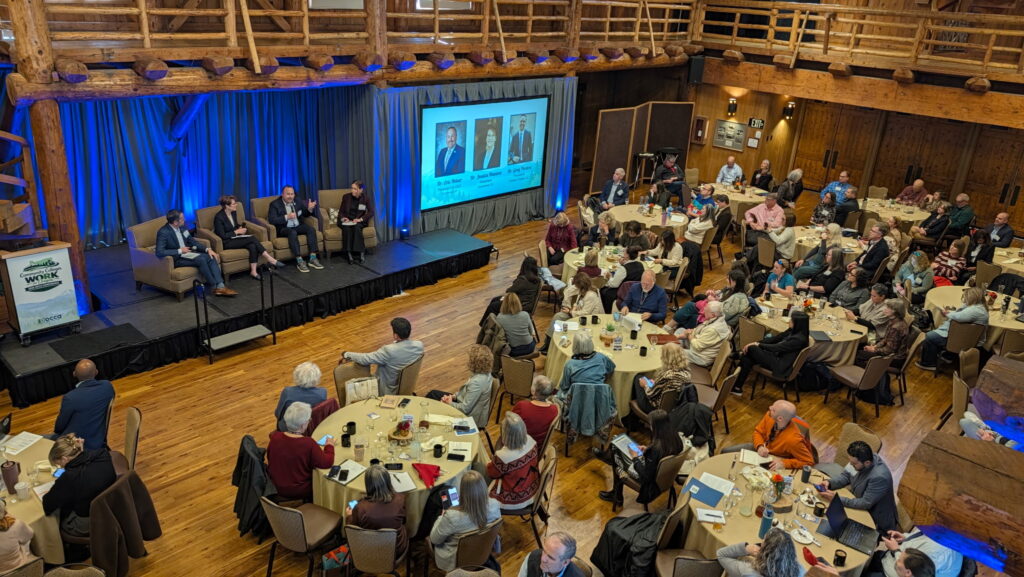
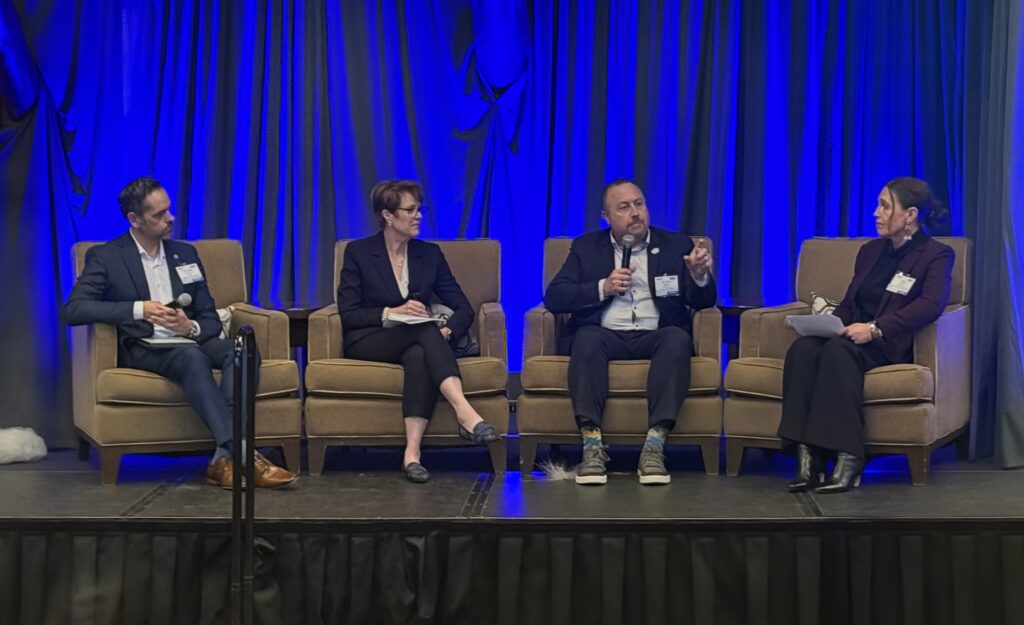
College presidents then explored what that work looks like in practice. Panelists included Dr. Eric Heiser, president of Coconino Community College in Arizona; Dr. Jessica Howard, president of Chemeketa Community College; and Dr. Greg Pereira, president of Central Oregon Community College.
Howard described the opportunity for colleges to convene employers, education partners, workforce organizations and philanthropy around a shared regional strategy. Pereira discussed Central Oregon’s growing bioscience industry and the work needed to connect students with those opportunities. Heiser emphasized partnerships that help colleges extend their reach and improve students’ employment outcomes.
The panel also addressed the cost of responding quickly. Launching a workforce program can require equipment, faculty and facilities before the first student enrolls. Expanding noncredit programs and documenting outcomes also requires staff and reliable data systems.
Speakers urged leaders to make those needs clear in their advocacy and to tell the stories that connect college investment with benefits for students, employers and communities.
Turning employer needs into opportunity
Kim Parker-Llerenas, executive director of Willamette Workforce Partnership, offered a concrete example of collaboration: employers identified a shortage of local truck driver training, and workforce partners worked with Chemeketa to help develop a program. Scholarships then helped connect job seekers with the training.
Her example reinforced a practical message from the afternoon: listen to employers, bring education partners into the conversation and combine resources to meet the need.
Thursday also included breakout sessions on governance, student basic needs, Workforce Pell, transfer pathways and financial planning. The evening’s Howard Cherry Awards Banquet celebrated leaders whose service has strengthened Oregon’s community colleges.
The conference continues Friday, November 6, with sessions on the board’s role in labor negotiations and a legislative panel as college leaders prepare for the 2027 legislative session.