
November 4, 2026
SUNRIVER, Ore. – Community college leaders from across Oregon gathered in Sunriver on November 4 for the opening day of the 2026 Oregon Community College Association (OCCA) Conference. The welcome reception and evening program offered time to reconnect with colleagues, exchange ideas and begin conversations that will continue through Thursday and Friday, November 5–6.
This year’s theme, “Community Colleges WORK for Oregon,” focuses on the work colleges do every day to help students reach their goals, prepare Oregon’s workforce and support their communities.
Pat Fahey, OCCA’s 2026–27 president and a Rogue Community College board member, served as the evening’s emcee. In welcoming attendees, he encouraged them to build relationships and bring ideas home to their colleges. He also set the stage for the evening’s Student Voice panel.
“There’s nothing quite like hearing directly from students about their experiences, what’s working at their colleges, and where we have opportunities to do better,” Fahey said. “And as board members, presidents, and college leaders, it’s important that we make time to listen.”
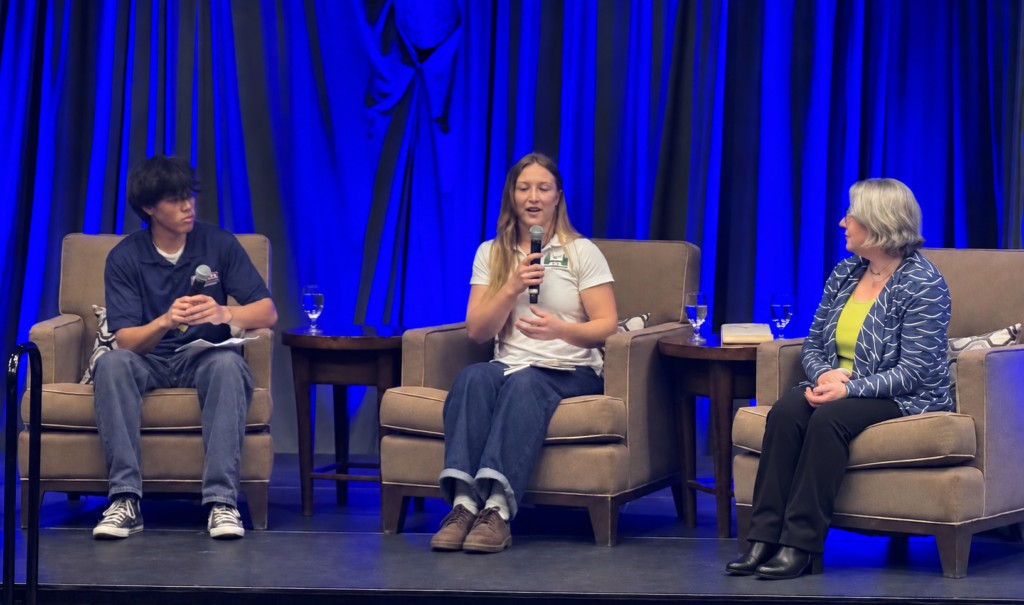
Students describe what meaningful engagement looks like
Moderated by Belle Cantor, OCCA’s director of student success initiatives, the panel featured David Bautista Gummersall of Treasure Valley Community College and Evelina “EJ” Juzenaite of Umpqua Community College. They shared how getting involved on campus has helped them build connections and influence decisions affecting their fellow students.
For Gummersall, moving closer to campus and joining student government changed his college experience. After a first year spent commuting between Caldwell and Ontario, he wanted to become more involved. Student leadership gave him a way to connect with classmates and represent their concerns.
“I feel like my voice is heard, and I feel like I can speak for all my friends on campus and for people that might not feel comfortable speaking up for themselves,” he said.
He described how student feedback helps guide campus improvements at Treasure Valley, including a new patio and sidewalk. Through surveys, student government meetings and participation in college governance, students can move ideas from informal conversations into discussions with college leaders.
Juzenaite, president of Umpqua’s Student Advisory Council, shared examples of students helping shape plans for the college’s welcome center and new housing. Their input reaches into practical details: building layouts, furniture, study spaces and the kinds of rooms students want.
She also emphasized the importance of reaching students where they already are. Through forums, tabling events and personal invitations, student leaders hear from classmates who might not otherwise join a committee or attend a meeting.
“I have learned that student voice and opinion matters,” Juzenaite said. “It doesn’t matter how big or small, how positive or negative.”
Both students offered advice to the college leaders in the room. Gummersall encouraged an open mind and an understanding that students come from different backgrounds. Juzenaite urged leaders to recognize staff members’ strengths and put people in positions where they can actively connect with and support students.
To close the conversation, Cantor asked the panelists to complete the statement, “Oregon’s community colleges work best when…”
“They put students first,” Juzenaite answered.
“When they work together,” Gummersall said.
Coming up Thursday and Friday
The conference continues Thursday with a keynote from Lumina Foundation’s Kermit Kaleba on credentials of value, an afternoon workforce panel, and breakout sessions covering topics such as governance, Workforce Pell, student basic needs and financial planning. Thursday evening’s Howard Cherry Awards Banquet will celebrate leaders whose service has strengthened Oregon’s community colleges.
Friday’s closing sessions will include a general session for attendees to learn more about “The Board’s Role in Labor Negotiations” as well a legislative panel featuring state Representatives Lisa Fragala, Werner Reschke and Ricki Ruiz. Attendees will hear perspectives on the issues ahead as colleges prepare for the 2027 legislative session and bring ideas from the conference back to their campuses and boardrooms.